Top 10 Legal Weight Limits for Triple Axle Trailers?

Time:2026-09-18 Author:Isabella
0%

What are the legal weight limits for triple axle trailers? The answer depends on axle spacing, trailer design, roadway classification, and the governing state. There is no universal “triple axle” number. That distinction matters when a loaded trailer reaches a scale.

The Federal Highway Administration’s Comprehensive Truck Size and Weight Study reports the familiar federal interstate limits: 80,000 pounds gross vehicle weight, 20,000 pounds on a single axle, and 34,000 pounds on a tandem axle. However, federal Bridge Formula calculations also consider axle distance. Three closely spaced axles may legally carry less than three widely spaced axles. FHWA’s Bridge Formula Weights guidance explains why axle spacing protects bridges, not merely tires and suspension components.

Transportation compliance attorney Annette Sandberg has expressed the practical principle this way: “Weight compliance is a state-by-state question, not a one-number answer.” That warning should guide every comparison in this article. A triple axle trailer traveling from Texas to Pennsylvania may encounter different limits, permit rules, or seasonal restrictions.

The American Association of State Highway and Transportation Officials also emphasizes pavement preservation, bridge safety, and consistent axle-load management in its transportation guidance. Those concerns become tangible at a weigh station: tire pressure, axle placement, cargo balance, and the final scale ticket can all change the result.

This overview compares ten commonly encountered legal weight limits and regulatory patterns. It is not a substitute for a state agency ruling. Some figures require verification. That is the part many quick guides overlook. Always confirm the route, axle spacing, registration category, and current permit requirements before loading.
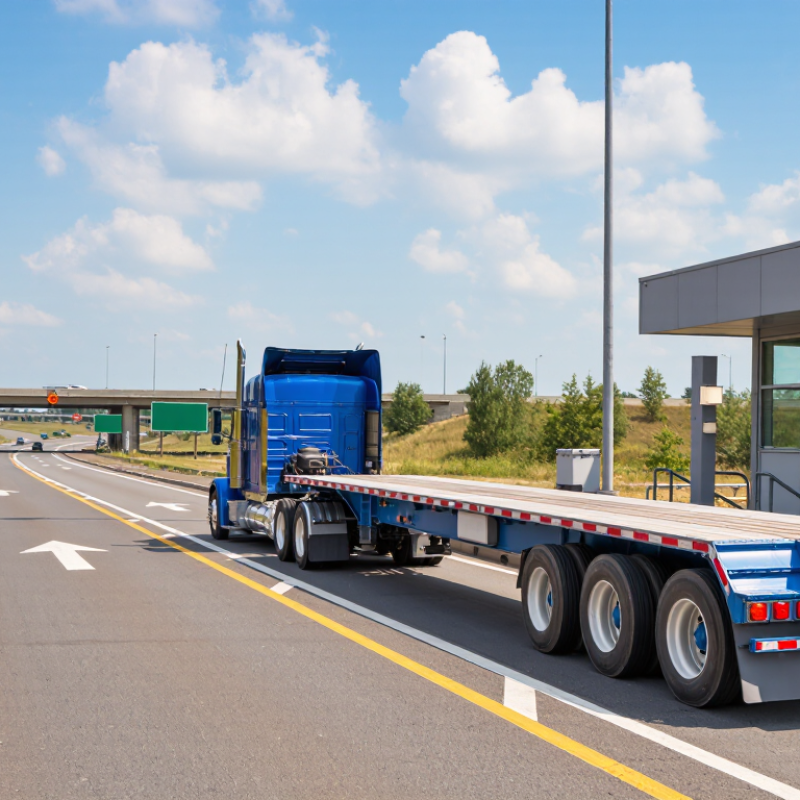
Top 10 Legal Weight Limits for Triple Axle Trailers?

Triple-Axle Trailer Ratings: GAWR, GVWR, and GCWR Explained

Triple-axle trailer ratings begin with GAWR, GVWR, and GCWR. GAWR is the maximum load assigned to one axle group. Three 7,000-pound axles may provide 21,000 pounds of combined GAWR. That is not automatically the legal payload.

GVWR covers the complete loaded trailer, including its frame, cargo, axles, tires, brakes, and equipment. The lowest-rated component usually controls the practical limit. SAE J2807 recommends consistent towing-rating methods, but it does not replace registration rules or manufacturer certification.

The U.S. Federal Highway Administration’s federal weight provisions list 20,000 pounds for a single axle and 34,000 pounds for a tandem axle on qualifying routes. Triple-axle combinations can still face bridge-formula limits, spacing rules, and state-specific restrictions.

GCWR adds the tow vehicle and trailer together. A trailer may have adequate GAWR but still exceed the tow vehicle’s GCWR after cargo, passengers, fuel, and hitch weight are counted. For example, a 21,000-pound trailer rating does not make a 14,000-pound-rated vehicle combination legal or safe.

Check the certification label first. Then weigh each axle separately on a certified scale. NHTSA crash-data reports repeatedly identify load control and vehicle stability as important safety concerns, though they do not establish a universal triple-axle limit.

Real-world loading is rarely perfect. Uneven cargo can overload one axle before the total weight appears excessive. Rules also change, and a simple chart can mislead.

Federal Baselines: 20,000 lb per Axle and an 80,000-lb GVW Cap

Top 10 Legal Weight Limits for Triple Axle Trailers?

Federal rules provide two important reference points for triple axle trailer planning. A single axle generally carries up to 20,000 pounds under federal standards. However, three axles do not automatically allow 60,000 pounds. Axle spacing, bridge formula calculations, tire ratings, and the vehicle’s certified ratings can reduce the permitted load.

The federal gross vehicle weight cap is commonly 80,000 pounds on qualifying interstate routes. This figure includes the truck, trailer, cargo, fuel, and occupants. It is a ceiling, not a guaranteed allowance. A triple axle configuration may still face lower limits because of axle groups, spacing measurements, or state-specific rules.

Measure carefully.

Load distribution matters. Concentrated cargo can overload one axle while the total weight appears acceptable. Portable scales help, but scale readings can vary with slope, temperature, and positioning. I have found that planning exactly at the maximum leaves little room for uncertainty. A safer approach keeps weight below the limit and checks the route before departure. State permits, seasonal restrictions, and local road rules may also apply, even when federal numbers appear satisfied.

Top 10 State Weight Limits for Triple-Axle Trailers Compared

Top 10 State Weight Limits for Triple-Axle Trailers Compared

For a standard five-axle combination, federal guidance generally sets interstate gross weight at 80,000 pounds. The Federal Highway Administration’s Bridge Formula also limits single axles to 20,000 pounds and tandem axles to 34,000 pounds. A triple-axle trailer does not automatically qualify for more weight. Representative interstate ceilings in Alabama, Arkansas, Georgia, Illinois, Indiana, Iowa, Kansas, Missouri, Ohio, and Texas are commonly 80,000 pounds, but axle spacing and bridge formulas still control the legal load. State permits can create higher limits on approved routes. That difference matters.

State rules become less uniform away from interstate highways. The American Association of State Highway and Transportation Officials notes that pavement design, bridge condition, and axle spacing influence allowable loading. A 2024 freight-mobility review also shows heavier combinations concentrating on designated corridors, not every local road. In practice, a triple-axle group may remain under its gross limit because tires, suspension ratings, or a short axle spread reduce the permitted bridge weight. A simple state table can mislead.

Tips: Check the exact route, axle spacing, tire ratings, and registration documents before loading. Weigh each axle group separately. Keep the scale ticket. I would recheck state permits after crossing a border, because an 80,000-pound limit is not a universal answer. The trailer may look balanced, yet one axle group can still exceed its legal share.

Top 10 State Weight Limits for Triple-Axle Trailers Compared

Maximum published gross vehicle weight for qualifying multi-axle combinations on selected non-Interstate routes

These figures represent the highest commonly published gross vehicle-weight limits for qualifying multi-axle combinations in each state. Actual legal weight for a triple-axle trailer depends on axle spacing, bridge-formula calculations, route classification, tire ratings, registration, and permit requirements. Interstate travel is generally limited to 80,000 lb unless an applicable exception or permit applies.

Reference: State department of transportation and motor-carrier regulations. Verify current route-specific limits before operating.

Bridge Formula B: How Axle Spacing Can Restrict Loads Below 60,000 lb

Top 10 Legal Weight Limits for Triple Axle Trailers?
Bridge Formula B: How Axle Spacing Can Restrict Loads Below 60,000 lb

A triple-axle trailer can look lightly loaded yet fail a bridge-weight calculation. The issue is not only axle count. Spacing between the outer axles changes the permitted combination weight under Bridge Formula B. The federal equation is W = 500[(LN)/(N-1) + 12N + 36]. Here, W is pounds, L is feet, and N is axle count. Check the exact jurisdiction before relying on it.

For three axles spread across 20 feet, the formula produces 51,000 pounds. That is already below 60,000 pounds. With only 10 feet between the outer axles, the result falls to 43,500 pounds. A tape measure matters. So does the definition of the axle group. A steer axle, tandem group, and trailer axles may create a different calculation than three closely spaced trailer axles. State bridge tables, seasonal rules, and permitted routes can also change the answer.

During a loading review, measure from axle center to axle center, not tire edges. Record each axle rating, tire capacity, and actual scale reading. Keep the load centered. A heavy pallet near the rear can overload one axle before gross weight looks alarming. I once treated a 60,000-pound target as a safe planning number. That assumption was too broad. Calculate the bridge limit, verify axle-group limits, and confirm current official rules before dispatch. Small spacing errors matter.

Permits, Tires, Brakes, and Enforcement: Verifying Legal Trailer Weight

Top 10 Legal Weight Limits for Triple Axle Trailers

A triple-axle trailer does not have one universal legal weight limit. The number depends on jurisdiction, axle spacing, road classification, and tow vehicle ratings. Start with the trailer data plate and manufacturer specifications. Compare GVWR, each GAWR, and the tow vehicle’s GCWR. The lowest rating controls. A certified public scale provides stronger evidence than a driveway estimate. Keep the ticket, registration, and inspection records together. Small detail. Big consequence.

A permit may be required when the loaded trailer exceeds ordinary limits, even if its tires appear capable. Permit conditions can specify routes, travel times, warning equipment, or escort requirements. Rules differ across states and provinces, so confirm details with the relevant transport authority before traveling.

Tires must match the required size, load range, inflation pressure, and speed rating. Inspect sidewalls for cuts and check pressure when cold. Extra capacity on paper does not fix an overloaded axle.

Braking systems deserve equal attention. Each axle may need operational service brakes, while the tow vehicle needs a compatible controller and breakaway system. Enforcement officers may use portable scales, inspect tires, review permits, and compare weights with axle ratings. Misreading a plate is easy, especially after adding tools, water, or spare parts. Reweigh after loading and leave a safety margin. Legal compliance is not always obvious; local guidance and a qualified inspection can reveal what a quick visual check misses.

FAQS

Does a triple-axle trailer automatically allow a higher legal weight?

No. Axle spacing, bridge limits, road class, and vehicle ratings still control the legal load. A table can mislead.

What gross weight is commonly allowed on major interstate routes?

A standard five-axle combination often has an 80,000-pound interstate ceiling. Single axles may be limited to 20,000 pounds, while tandem axles may reach 34,000 pounds. The exact route still matters.

Can a trailer stay below 60,000 pounds and still exceed a bridge limit?

Yes. Three axles spread across 20 feet may produce a 51,000-pound bridge limit. With only 10 feet between outer axles, the result may fall to 43,500 pounds. Spacing matters.

How should axle spacing be measured?

Measure from axle center to axle center, not between tire edges. Record the spacing in feet before calculating the allowed combination weight. Small measurement errors matter.

What ratings should be checked before loading?

Compare the trailer’s GVWR, each GAWR, tire capacity, and tow vehicle GCWR. The lowest applicable rating controls. Do not rely on appearance.

Can a permit allow a heavier triple-axle trailer?

Sometimes. A permit may allow higher weight on approved routes. It can also require travel times, warning equipment, or escorts. Check the current conditions before crossing a border.

How can a load exceed one axle’s limit while gross weight looks acceptable?

A heavy pallet near the rear can shift weight onto one axle group. Keep the cargo centered and weigh each axle group separately. Balanced-looking loads can still fail.

What documents and checks should be kept during travel?

Keep the certified scale ticket, registration, inspection records, and permit together. Inspect cold tire pressure, sidewalls, brakes, and the breakaway system. Reweigh after loading. I once trusted a 60,000-pound target too broadly. That was a poor assumption.

Conclusion

Understanding what are the legal weight limits for triple axle trailers requires more than adding together the ratings of three axles. This summary explains GAWR, GVWR, and GCWR, showing how each rating affects the trailer, cargo, and towing vehicle. It also outlines common federal baselines, including a potential 20,000-pound limit per axle and an 80,000-pound gross vehicle weight cap, while emphasizing that state rules may differ. A comparison of ten state approaches highlights why location, road type, and vehicle configuration matter.

The article also explains Bridge Formula B, which can restrict allowable weight based on axle spacing, sometimes placing the legal limit below 60,000 pounds. Finally, it covers practical compliance checks involving permits, tire capacity, braking systems, axle spacing, registration, and roadside enforcement. Before loading, operators should verify every rating and applicable jurisdictional requirement rather than relying only on the trailer’s combined axle capacity.

Isabella

Isabella

Isabella is a dedicated marketing professional with a sharp focus on driving brand growth and engagement through strategic content creation. With an extensive background in digital marketing, she combines her passion for storytelling with her keen understanding of industry trends to deliver......