Firefighting strategies have evolved significantly over the years. One crucial inquiry is, "why do specialized fire trucks use foam instead of water?" According to a report by the National Fire Protection Association (NFPA), using foam can reduce overall water usage by approximately 80% in certain types of fires. This reduction is not merely economical but also essential in effectively combating flammable liquids.
Dr. Sarah Jenkins, a renowned fire safety expert, emphasizes the advantages of foam, stating, "Foam creates a barrier between the fuel and the air, smothering the fire more efficiently." This technique is particularly useful in combating petrochemical fires, where water alone often fails. Additionally, the foam works to cool the flames and prevent re-ignition. This highlights a shift towards more effective firefighting methods, yet some might wonder why traditional water usage remains prevalent in certain scenarios.
Despite the benefits, challenges exist. Not all fire departments are equipped or trained for foam application. Moreover, the environmental impact of foam additives raises questions that warrant deeper consideration. While foam offers clear advantages, the transition requires reflection on existing practices and ongoing improvements in fire service training.
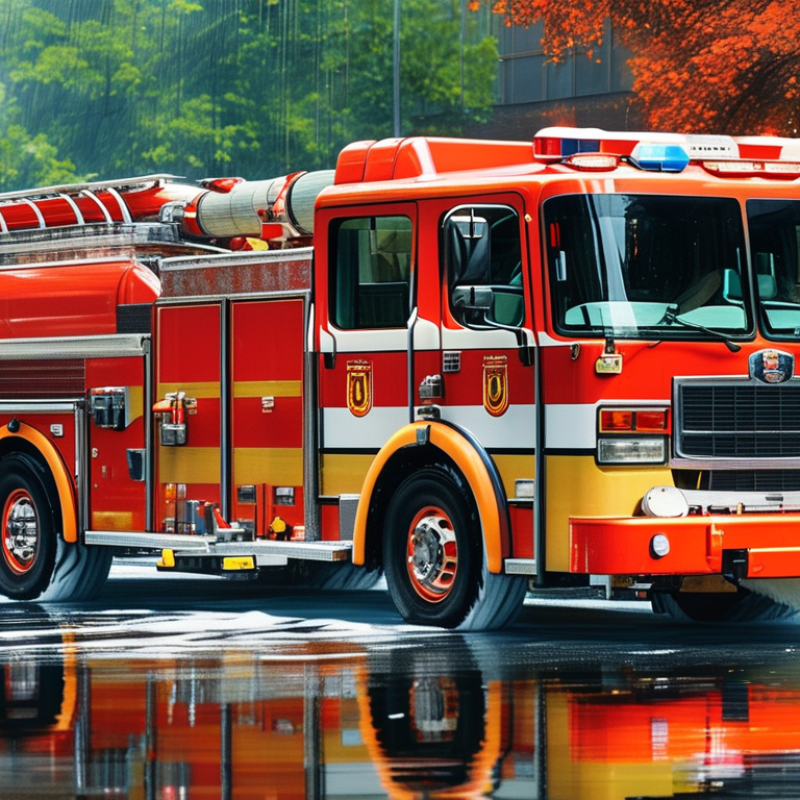
Fire Trucks and Their Choice of Foam Over Water in Fire Suppression
Fire trucks are increasingly opting for foam instead of water to combat certain types of fires. Foam offers several advantages, particularly against flammable liquid fires. When foam is applied, it creates a barrier that smothers the flames and prevents re-ignition. Water, while effective in many scenarios, can sometimes exacerbate flammable liquid fires by spreading the liquid.
Moreover, foam can penetrate burning materials more effectively than water. This is crucial in industrial settings where materials may be deeply embedded. The ability to rapidly blanket a fire reduces the chance of the fire spreading. However, foam is not universally effective. Some firefighters express concern about its long-term environmental impacts.
Another consideration is that foam requires extensive training to use properly. Firefighters need to understand how to use different foam types effectively. Incorrect application can lead to wasted resources and potential danger. The balance between effectiveness and environmental safety creates a complex discussion. This ongoing evolution in fire suppression strategies reflects a commitment to improving firefighting methods while tackling the challenges of modern fires.
Why Do Fire Trucks Use Foam Instead of Water for Fires?
| Property |
Water |
Foam |
| Extinguishing Mechanism |
Cools the fire |
Smothers the fire and prevents re-ignition |
| Application Efficiency |
Requires large volumes |
Requires less volume, more effective coverage |
| Impact on Surfaces |
Can cause water damage |
Less damage, often safer for equipment |
| Types of Fire |
Solid combustibles |
Flammable liquids and gases |
| Ease of Use |
Simple to use |
Requires correct mixing and application techniques |
| Environmental Impact |
Natural, but can lead to runoff problems |
Potential for pollutants, requires careful handling |
Understanding the Composition and Effectiveness of Firefighting Foam
Firefighting foam is a specialized tool in the battle against fires, particularly when it comes to ignitable liquids. Its composition typically includes surfactants, which help reduce the surface tension of water. This characteristic allows foam to spread quickly, effectively smothering flames and preventing air from fueling the fire. According to a study from the National Fire Protection Association, foam can extinguish flammable liquid fires 30% faster than water alone in certain scenarios.
One key advantage is foam's ability to form a blanket over flammable materials. This blanket suppresses vapors, reducing the risk of re-ignition. In some cases, depending on the foam type, it can provide thermal insulation, offering additional protection for firefighters during extreme conditions. However, not all applications are perfect. Certain types of foam can carry environmental concerns, particularly those containing PFAS. This raises questions about using certain formulations in sensitive ecosystems, leading to ongoing discussions in the firefighting community about safer alternatives.
Firefighters continually adapt their techniques based on incidents and advancements in foam technology. Many experts advocate for more training on foam application, arguing that improper use can diminish its effectiveness. Research indicates that inefficiencies in foam dispersal can result in wasted resources, sometimes leading to extended burning times. This highlights the need for robust training and knowledge-sharing among firefighters to ensure optimal outcomes when using foam in various firefighting scenarios.
Comparing Water and Foam: Advantages in Combating Different Types of Fires
Firefighting techniques have evolved, leading to the increasing use of foam instead of water in tackling different types of fires. Foam is particularly effective against flammable liquids, such as gasoline and oil. According to a report by the National Fire Protection Association (NFPA), foam can suppress flames more efficiently than water, reducing potential flare-ups. Water alone may spread certain liquids, worsening the fire's intensity.
In contrast, water is best for ordinary combustibles like wood and paper. It absorbs heat and lowers the temperature. However, when dealing with volatile substances, water may prove ineffective. In fact, research indicates that water may only extinguish around 40% of flammable liquid fires. Foam creates a barrier, smothering the fire and preventing oxygen from fuelling it further.
*Tip: When responding to a fire, assess the material before choosing foam or water. Using the wrong method can lead to increased danger.*
Foam also has environmental advantages. Reports indicate that certain foams are biodegradable and less harmful than traditional firefighting agents. However, some types of firefighting foam may contain harmful chemicals, which raises concerns for groundwater contamination. Fire departments are exploring alternatives to ensure safety and efficiency in firefighting.
*Tip: Always stay informed about the types of foam being used in your area. Understanding their components helps address environmental concerns.*
Comparison of Fire Extinguishing Agents: Water vs Foam
This bar chart illustrates the advantages of using foam and water as fire extinguishing agents across various fire types. It showcases effectiveness, residue, and cooling properties.
Industry Standards: When and Why Foam is Recommended for Fire Response
Foam firefighting agents have gained traction in industry standards due to their effectiveness. Unlike water, foam can smother flames and inhibit reignition. According to the National Fire Protection Association (NFPA), foam is particularly recommended for hazardous materials fires. Foam creates a barrier that isolates the fuel from oxygen, which makes it efficient.
When it comes to structural fires, foam can effectively tackle complex scenarios. Its ability to penetrate deep into materials makes it useful in extinguishing stubborn fires. The National Institute for Occupational Safety and Health (NIOSH) indicates that foam reduces the heat release rate, which is critical in high-risk situations.
Tip: Always assess the situation. Use foam in cases involving flammable liquids or petroleum products. It is crucial to understand your fire environment.
In incidents with mixed fuel types, utilizing foam can be both beneficial and complicated. The versatility of foam may lead to over-application, creating excessive runoff. Addressing this concern is vital to prevent environmental damage.
Tip: Choose the right foam concentrate. Different fires require specific foam types. Familiarize yourself with your options for better outcomes. Foam usage is not always straightforward; proper training and knowledge are essential.
Recent Case Studies Highlighting Foam's Superior Performance in Emergencies
Fire trucks increasingly utilize foam instead of water for battling fires. Recent studies demonstrate foam's effectiveness in diverse emergency scenarios. A case study from the National Fire Protection Association found that foam can suppress fires up to 30% faster than water. This speed is critical in preventing fire spread.
Foam forms a thick blanket over flammable materials. This action inhibits oxygen from reaching the fire source. For instance, in aviation fuel fires, foam can extinguish flames in less than 60 seconds. Compared to water, which may take minutes, foam is notably superior. One report indicated that fires in industrial settings show a 50% reduction in resurgence when foam is used.
While foam offers advantages, not all fire departments have the same training. Misapplication or inadequate concentration can lead to poor outcomes. In one incident, improper foam use resulted in a prolonged fire fight. Such events highlight the importance of proper techniques in foam deployment. As departments strive for better outcomes, continuous training remains essential.
FAQS
: Foam effectively suppresses flammable liquids better than water. It prevents oxygen from fueling the fire.
Water is ideal for ordinary combustibles like wood and paper. It absorbs heat and lowers the fire’s temperature.
No, water is not effective for flammable liquids. It may even spread certain substances, worsening the fire.
Foam can suppress fires up to 30% faster than water. In aviation fuel fires, it can work in under 60 seconds.
Some foams may contain harmful chemicals. Their use raises concerns about groundwater contamination and environmental safety.
Always assess the material involved in the fire. Using the wrong method could increase danger significantly.
Misapplication of foam can lead to prolonged fights. Continuous training is essential for effective fire suppression.
No, some foams are biodegradable and safer. Others may pose risks due to harmful components. Know what's used locally.
Incorrect usage can prolong fire containment efforts and lead to ineffective results. Proper techniques are vital.
They study past incidents and conduct ongoing training. This helps improve response times and effectiveness in emergencies.
Conclusion
Fire trucks often utilize foam instead of water for fire suppression due to its unique effectiveness in combating various types of fires. Understanding the composition of firefighting foam reveals that it is specially designed to suffocate flames and prevent re-ignition, particularly in situations involving flammable liquids where water may be ineffective. This distinction highlights why do specialized fire trucks use foam instead of water; foam can form a barrier between the fuel and the fire, enhancing overall safety and efficiency during emergency responses.
Additionally, industry standards and recent case studies illustrate the advantages of foam in real-world applications. Foam not only adheres better to surfaces but also reduces the risk of runoff and environmental contamination compared to water. These factors make foam an essential tool for firefighting professionals, allowing them to tackle emergencies more effectively and safely.

 Flex Truck