How to Choose a Side Loader or Rear Loader Garbage Truck?

Time:2026-10-03 Author:Amelia
0%

Choosing the right garbage truck begins with the route, not the brochure. Municipal waste volumes remain substantial. The U.S. Environmental Protection Agency reported 292.4 million tons of municipal solid waste generated in 2018, averaging 4.9 pounds per person daily. That scale makes equipment selection an operational decision, not a simple purchasing preference.

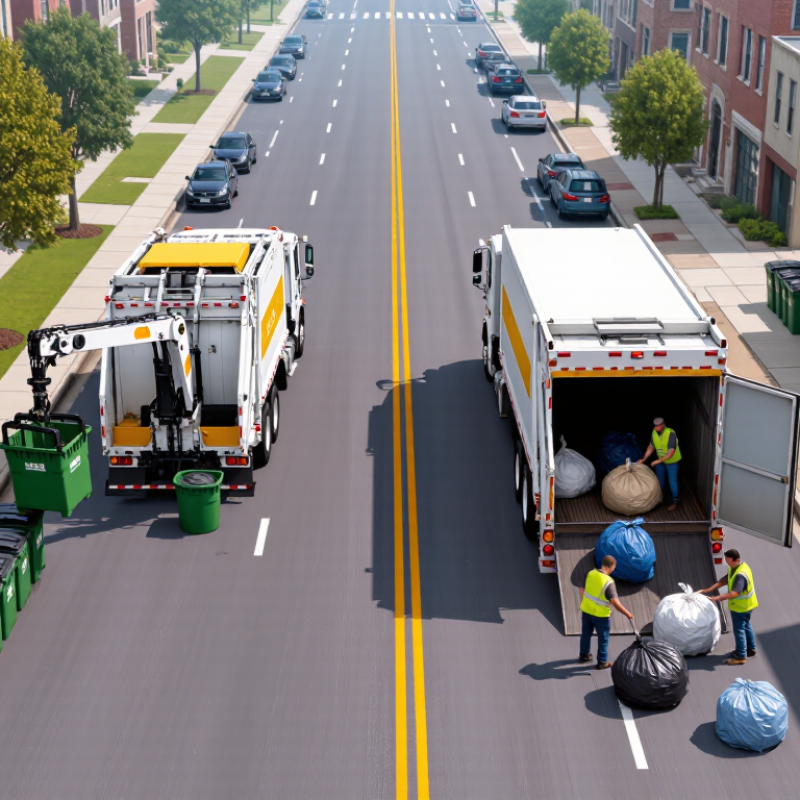
The practical question is how to choose between a side loader and a rear loader garbage truck. Side loaders suit repeatable curbside routes with standardized carts, wide streets, and limited manual handling. Their automated arms can improve consistency, but they need accurate cart placement and enough clearance beside parked vehicles. Rear loaders offer greater flexibility around alleys, narrow roads, bulky items, and irregular containers. Their strengths can become weaknesses when crews face heavy lifting, wet waste, or congested collection points. The U.S. Bureau of Labor Statistics continues to identify refuse and recyclable material collection as a high-risk occupation, reinforcing the value of safety-focused design and route planning.

Real decisions should compare payload, body capacity, cycle time, fuel use, maintenance access, crew size, and local container standards. A side loader may reduce labor exposure on a clean suburban route. A rear loader may perform better in older neighborhoods with inconsistent set-outs. No spreadsheet replaces a route walk. Some specifications look perfect on paper and fail beside a tight corner. Buyers should review service records, operator feedback, downtime reports, and total cost of ownership. This guide examines those trade-offs using field experience, manufacturer specifications, and recognized public-sector data. The answer may not be obvious. That is exactly why the comparison matters.
How to Choose a Side Loader or Rear Loader Garbage Truck?

Define the Choice: Route Type, Container Access, and Crew Size

How to Choose a Side Loader or Rear Loader Garbage Truck?

Choosing a garbage truck starts with the route, not the vehicle catalog. A compact urban route may have tight corners, parked cars, and narrow service lanes. Side loading suits containers placed consistently along the curb. The operator can often collect them without leaving the cab. On narrow streets, every meter matters. However, side access becomes difficult when bins sit behind fences, trees, or uneven curbs. Route measurements should confirm the real clearance, not the planned clearance.

Rear loaders offer broader container access in crowded or irregular neighborhoods. Crews can reach bins from alleys, shared enclosures, and locations with poor side alignment. This flexibility can help where residents move containers unpredictably. It may require workers to handle containers near traffic and wet pavement. That increases the need for clear procedures, visibility equipment, and careful training. A blocked alley can stop the route.

Crew size also changes the decision. A side loader may support a one-person operation on predictable routes, reducing coordination demands. A rear loader commonly works better with a small crew when containers are heavy or scattered. Labor savings can disappear if one operator must repeatedly reposition the truck. Container weight, pickup frequency, and walking distance should be measured over several days. Early route estimates are often too optimistic. Real conditions expose missed bins, delayed stops, and awkward container access.

Compare Capacity: Typical 20–40 yd³ Bodies and 10–15-Ton Payloads

Choosing between a side loader and rear loader starts with the work, not the truck’s appearance. Typical bodies hold about 20–40 cubic yards of material. Payloads often range from 10 to 15 tons. These figures describe different limits.

A 40-yard body is not automatically the better choice. Loose household waste may fill the body before reaching its weight limit. Wet food waste, dense debris, or compacted commercial refuse can reach 10 tons much sooner. Space is not payload. That difference matters.

In field evaluations, I check the collection route, container size, loading frequency, and disposal scale records. A side loader can suit predictable residential streets with standardized carts. A rear loader may handle irregular containers and bulky material more flexibly. However, the rear opening can demand more clearance at crowded collection points.

Measure actual material density when possible. One route may produce lightweight packaging, while another carries heavy renovation waste. The same 30-yard body can perform very differently. Axle ratings, compaction settings, and legal weight limits also affect usable capacity. Operators should avoid treating the advertised volume as daily working capacity.

A perfect estimate is rare. Seasonal changes can expose weak assumptions. Rain increases some waste loads, while holiday periods increase volume. Review several weeks of scale tickets before choosing a 20-, 30-, or 40-yard body. Small route details often matter more than a larger box.

Evaluate Productivity: One-Operator Automation Versus 2–3-Person Crews

How to Choose a Side Loader or Rear Loader Garbage Truck?

Evaluate Productivity: One-Operator Automation Versus 2–3-Person Crews

A side loader can collect residential carts with one operator and automated controls. That design removes repeated lifting and reduces door-side stops. The U.S. Bureau of Labor Statistics reported 1.5 million jobs in transportation and material moving occupations in May 2023. Labor availability matters when routes expand. A rear loader may need two or three workers, but crews can handle bulky bags, narrow alleys, and poorly placed containers more flexibly. More hands do not always mean more output. Truck speed, container density, traffic, and missed pickups can change the result.

The 2023 State of Garbage in America Report estimates that U.S. communities generated about 292 million tons of municipal solid waste in 2018. That volume makes route efficiency important, but the report does not promise one universal truck advantage. Operators should compare stops per hour, tons per shift, overtime, injury claims, fuel use, and repair downtime. A one-person route may look cheaper on paper. It can lose productivity when the driver must leave the cab repeatedly. Rear-loader crews may move faster at crowded commercial sites, yet payroll costs rise quickly. I would not choose from brochure figures alone.

Tips: Run a four-week route trial. Record cycle time, crew hours, missed containers, and fuel consumption. Include rainy days. Ask drivers where automation slows them down. A perfect test is unlikely. That is useful. Real streets expose weak assumptions.

Analyze Compaction: Typical 3:1–5:1 Waste Volume Reduction

Choosing between a side loader and a rear loader starts with more than route width or purchase price. Compaction performance can change collection efficiency, fuel use, and disposal frequency. Many refuse trucks achieve roughly a 3:1 to 5:1 waste volume reduction, depending on the material and equipment design. The ratio is not a guarantee.

A 3:1 ratio means three cubic meters of loose waste may occupy one cubic meter after compaction. At 5:1, the same volume becomes even denser. Dry packaging often compresses well. Wet food waste behaves differently and may resist uniform packing. Bulky items can create empty pockets inside the body. Watch the load.

Side loaders suit routes with consistent container placement and limited curbside interaction. Their automated arms can reduce manual handling and maintain steady collection times. Rear loaders offer strong flexibility for irregular stops, bags, and mixed container sizes. Their rear hopper also gives crews direct access during difficult pickups. However, loading conditions can influence how evenly the compactor fills.

In field evaluations, I would compare actual payload weights with estimated body volume. Review several routes, not one convenient day. Track moisture, material type, cycle time, and rejected loads. A truck showing a 5:1 claim may deliver closer to 3:1 under wet conditions. That gap deserves attention. Operators should also inspect hydraulic pressure, blade movement, and chamber wear, because declining maintenance can reduce compaction before anyone notices. The best choice is the truck that matches real waste behavior, not the highest advertised ratio.

Check Safety and Cost: Lift Limits, Maintenance, Fuel, and Lifecycle Data

Choosing between a side loader and rear loader garbage truck requires more than comparing purchase prices. Start with lift limits, because overloaded containers increase strain on hydraulic systems and create safety risks. Check the rated lifting capacity against your actual route data, not ideal figures from a brochure. A narrow residential street may favor a side loader, while irregular alley access may suit a rear loader.

Watch the operator’s working area. Side loaders can reduce ground interaction, but mirrors, cameras, and sensors need regular inspection. Rear loaders usually require more crew movement near traffic and moving equipment. Small details matter. Test visibility in rain and darkness.

Maintenance records reveal the real cost. Compare hydraulic oil changes, cylinder repairs, tire wear, and downtime over several years. Fuel use also depends on stop frequency, payload weight, idling, and driving terrain. A heavier truck may consume more fuel, even when its purchase price looks attractive. Track fuel per route and tons collected.

Lifecycle data should include training, replacement parts, resale value, and missed collection hours. In my own cost reviews, early estimates often ignored downtime. That was a mistake. Ask for service intervals and repair histories, then compare them with your climate and workload. A truck that performs well for one fleet may struggle on yours. Recheck the numbers after a trial route.

FAQS

What body size is typical for these collection vehicles?

Typical bodies hold about 20–40 cubic yards of material. Bigger is not always better.

What payload range should operators expect?

Payloads often range from 10 to 15 tons. Volume and weight describe different limits.

Why might a 40-yard body still be unsuitable?

Loose packaging may fill the body before reaching its weight limit. Wet food waste can reach 10 tons sooner.

When is a side loader usually suitable?

Side loaders fit predictable residential streets with standardized carts. Their automated arms can reduce manual handling.

When can a rear loader be more flexible?

Rear loaders handle irregular containers, bags, and bulky materials more easily. They need extra clearance at crowded stops.

What does a 3:1 compaction ratio mean?

Three cubic meters of loose waste may occupy one cubic meter after compaction. It is only an estimate.

Can actual compaction differ from advertised performance?

Yes. Wet waste may approach 3:1 instead of 5:1. Bulky items can leave empty pockets.

Which route details should be reviewed before choosing a vehicle?

Check container sizes, loading frequency, route conditions, and disposal scale records. Review several weeks, not one convenient day.

How do weather and seasons affect usable capacity?

Rain can increase waste weight. Holiday periods can increase volume. Small changes may expose weak assumptions.

What maintenance details can reduce compaction performance?

Inspect hydraulic pressure, blade movement, and chamber wear. Declining maintenance can quietly reduce compaction.

Conclusion

Choosing the right garbage truck begins with understanding the collection route, container access, and available crew size. The key question is how to choose between a side loader and a rear loader garbage truck based on daily operating conditions. Side loaders are often suitable for routes with consistent container placement and can support one-operator automation, while rear loaders may offer greater flexibility for varied access points and typically work with two- or three-person crews. Both designs commonly use bodies of approximately 20–40 yd³ and payload capacities around 10–15 tons, depending on configuration.

Productivity also depends on loading speed, route density, and compaction performance. Typical compaction can reduce waste volume by about 3:1 to 5:1, helping extend collection capacity and reduce trips. Before deciding, operators should compare lift limits, maintenance requirements, fuel use, operator workload, and total lifecycle costs. A practical evaluation of safety, reliability, service needs, and long-term operating data will help match the truck to the route rather than focusing only on purchase price.

Amelia

Amelia

Amelia is a seasoned marketing professional with a wealth of expertise in our company’s core offerings. With an unwavering passion for driving growth and innovation, she plays a pivotal role in shaping our marketing strategies and enhancing brand visibility. A key aspect of her responsibilities......