Choosing between air suspension and leaf springs affects more than ride comfort. It changes how a vehicle carries weight, handles corners, and responds to rough roads. A delivery truck may need stable support under changing loads. A classic pickup may value simplicity and proven durability.
The key question is: what are the advantages of air suspension vs leaf spring? Air suspension can provide adjustable ride height, smoother movement, and better leveling when cargo weight changes. Its air bags may soften harsh impacts on broken pavement. Electronic controls can also improve consistency. However, compressors, valves, sensors, and air lines create more parts to inspect. A small leak can become a serious inconvenience during a long trip.
Leaf springs remain practical for many work vehicles. Their layered steel construction is easy to understand and often simpler to repair. They can handle heavy loads without electronic controls. Still, they may produce a firmer ride, especially when the truck is lightly loaded. Bushings, shackles, and spring packs also wear over time.
Real workshop experience matters here. A suspension that feels excellent on an empty highway may behave differently beside a loaded trailer. Manufacturer load ratings, axle limits, installation quality, and maintenance records should guide the decision. Air suspension is not automatically superior. Leaf springs are not outdated by default. That assumption deserves review.
The better system depends on the vehicle’s purpose, road conditions, budget, and tolerance for maintenance. Careful inspection should come before confident judgment. A practical comparison must include comfort, payload control, reliability, repair access, and long-term operating cost.
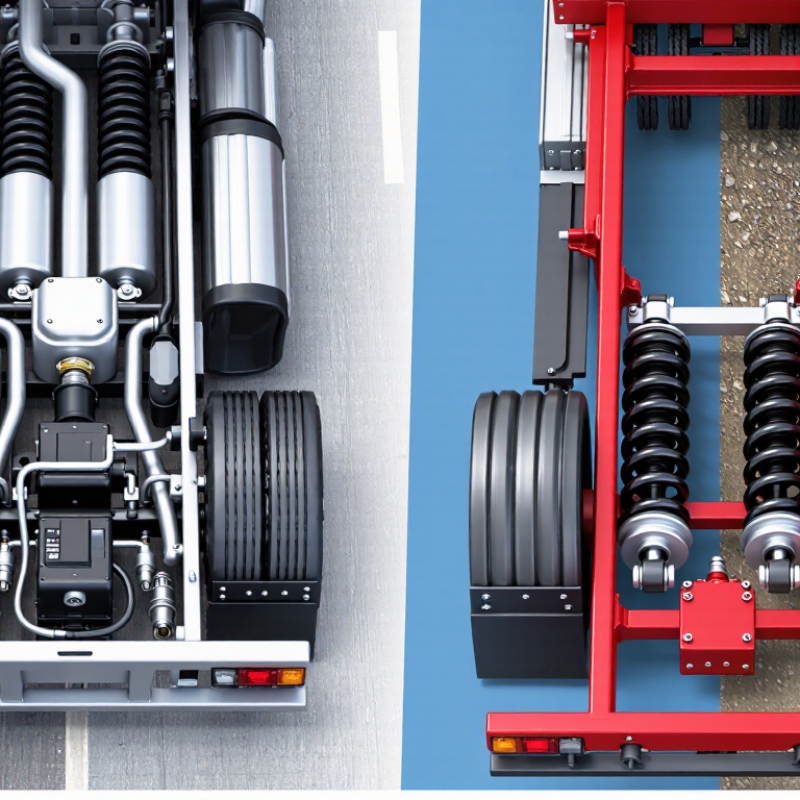
Air suspension uses flexible air springs instead of conventional steel springs. A compressor fills each air bag through valves and height sensors. This system adjusts ride height when cargo weight changes. In practical inspections, a loaded vehicle can remain more level with air suspension. It may also reduce road vibration and improve cabin comfort. However, leaks, damaged hoses, or compressor failure can cause uneven height. Repairs may require careful pressure testing and electronic diagnosis.
Leaf springs are curved, layered steel strips mounted between the axle and chassis. Their shape supports the vehicle while controlling axle movement. They are strong, simple, and familiar to many repair technicians. A heavily loaded truck may depend on their steady support. Over time, worn bushings, cracked leaves, or sagging steel can affect handling. They usually offer fewer adjustment options than air systems. Still, simpler does not always mean better.
Tips: Inspect air bags for cracks and listen for overnight pressure loss. Check leaf springs for rust, broken layers, and uneven gaps. Match the suspension to real cargo demands, not showroom comfort. Air suspension can be excellent for variable loads, but maintenance costs are easy to underestimate. Leaf springs can feel firm, sometimes too firm, especially on rough roads. A careful road test matters more than assumptions.
Air Suspension vs Leaf Springs: Which Is Better?
Vehicle weight is not static. A delivery truck may leave empty, then carry several tons by noon. Leaf springs manage this load through stacked steel leaves, spreading force across the axle and frame. They are mechanically simple and remain dependable on rough roads. Air suspension uses pressurized air bags, valves, and height sensors. The system adjusts pressure as the load changes, helping maintain a consistent ride height and reducing body movement.
Federal Motor Carrier Safety Administration guidance lists common federal limits of 20,000 pounds for a single axle and 34,000 pounds for a tandem axle, subject to bridge-formula limits. Suspension type does not increase those legal limits. The FHWA Freight Analysis Framework also projects freight demand to keep growing through 2050, making variable-load control increasingly important. Air systems generally provide better load leveling and ride comfort, especially when cargo is sensitive to vibration. Leaf systems usually offer easier inspection and lower repair complexity.
That advantage is not universal. Air suspension depends on compressors, airlines, valves, and sensors. One leak can lower ride height before the driver notices. Leaf springs are heavier and can transmit sharper impacts, yet their failure symptoms are often easier to identify. In field maintenance, I would choose air suspension for changing payloads and ride control, but leaf springs for rugged simplicity. The compromise matters. Jobsite conditions can change the answer.
Comparing Ride Comfort, Stability, and Load Capacity
When a truck crosses broken pavement, air suspension usually feels calmer. Adjustable air bags absorb sharp impacts and reduce vibration through the cab. Passengers notice less bouncing on long journeys. The benefit is clearest with uneven loads. Air pressure can also help maintain ride height. That keeps headlights and suspension geometry closer to their intended positions. However, poor pressure settings can make the vehicle float or lean. Comfort is not automatic.
Leaf springs feel firmer and more direct. Their layered steel construction handles repeated heavy loading with relatively little complexity. Under a balanced payload, they can provide predictable stability on rough work sites. They also tolerate simple roadside repairs better in many regions. The trade-off is harsher impact transfer, especially when the truck is lightly loaded. Empty beds can feel noticeably stiff. I once favored this firmness as “control,” but prolonged vibration changed my view.
Load capacity depends on spring rating, axle limits, frame strength, and correct loading. Air systems offer useful leveling, yet they cannot create extra axle capacity. Excess pressure may improve height while reducing grip over uneven ground. Leaf springs may sag when overloaded, and fatigue can develop around mounting points. Regular inspections should check air leaks, cracked leaves, worn bushings, and uneven tire wear.
Air suspension usually costs more to maintain because it adds air bags, height sensors, valves, lines, and a compressor. A damaged air line can lower one corner overnight. Leaf springs use fewer parts, so roadside diagnosis is often faster and cheaper. The American Trucking Research Institute reported average truck repair and maintenance costs of about $0.198 per mile in its 2023 Operational Costs of Trucking report. Suspension is only one part of that figure, but repeated air-system repairs can raise the total.
Leaf springs tolerate rough loading and minor impact damage well. Their failure is usually visible: cracks, sagging, or broken leaves near the axle. Air suspension can protect cargo better and maintain ride height, yet neglected leaks may overload the compressor. The Technology & Maintenance Council’s maintenance guidance stresses regular inspections of fasteners, bushings, air lines, and ride-height settings. That matters more than the suspension type alone.
In field inspections, I have seen simple leaf packs outlast poorly serviced air systems. That is not a universal rule. Correct loading, road quality, and inspection discipline change the result. Air components may reduce cargo shock, but replacement prices and labor access vary widely. Leaf springs can also become expensive when bushings seize or spring eyes wear. A fleet comparing operating costs should record suspension-related work orders separately, not hide them inside general maintenance data. The cleaner answer is often incomplete.
Air suspension and leaf springs suit different driving needs.
The right choice depends on load changes, road quality, ride comfort, and maintenance access. A delivery truck carrying fragile goods may benefit from air suspension. Its adjustable air bags help maintain a more consistent ride height as payload changes. That can reduce harsh impacts on uneven roads. It also supports easier loading at different dock heights.
Leaf springs remain practical for construction vehicles, rural routes, and frequent off-road work. Their layered steel design handles repeated impacts and heavy loads with simple mechanical support. Repairs are usually easier in small workshops. There is less dependence on compressors, valves, and electronic controls. Simple matters.
Industry perspective Industry data supports this practical distinction. The American Trucking Associations’ 2024 American Trucking Trends report recorded about 11.27 billion tons of freight moved by trucks in the United States during 2022. Such varied cargo demands make load control important. However, that report does not prove air suspension is universally better. It only shows why suspension choice must match operating conditions.
The Federal Highway Administration’s Freight Facts and Figures reports also show the continuing importance of heavy freight corridors. Vehicles working long highway distances may value air suspension’s smoother ride and height control. Short-haul vehicles facing rough sites may favor leaf springs’ durability and predictable upkeep. Operators should compare downtime records, axle loads, tire wear, and real route conditions. A smoother ride can still disappoint if maintenance support is limited.
Air bags adjust pressure as cargo weight changes. The system helps maintain a steady ride height. Useful during a busy delivery day.
Stacked steel leaves spread force across the axle and frame. Their design is simple and mechanically dependable. They handle repeated loading well.
Air suspension usually feels calmer on broken pavement. It reduces bouncing and vibration inside the cab. The improvement is clearest with uneven cargo.
They can be. Leaf springs tolerate repeated impacts and simple roadside repairs. Construction routes may suit their rugged design. Their ride can feel harsh when the vehicle is empty.
No. Suspension cannot create extra axle or frame capacity. Correct loading still depends on axle ratings and vehicle structure. More air pressure is not a magic solution.
Compressors, airlines, valves, and sensors require inspection. A small leak may lower ride height quietly. Check fittings, air bags, and uneven tire wear. Drivers may notice the problem late.
Inspect for cracked leaves, sagging, worn bushings, and damaged mounts. Fatigue can develop near mounting points. Symptoms are often easier to recognize. That is useful during roadside checks.
Air suspension may suit these conditions better. It reduces harsh impacts and helps keep the body level. Cargo can still move if pressure settings are poor. Comfort is not automatic.
Leaf springs are often easier to inspect and repair. They need fewer electronic controls and air components. Air systems may reduce vibration, but parts access matters. I might choose differently after studying local downtime.
Air suspension and leaf springs are two common ways to support vehicle weight, but they work differently. Leaf springs use layered, flexible metal strips to carry loads and provide a simple, durable structure. Air suspension uses inflatable air bags that adjust pressure to support the vehicle and maintain a more consistent ride height. When comparing ride comfort, stability, and load capacity, air suspension generally offers a smoother ride, better height control, and improved adaptability to changing loads, while leaf springs are valued for their strength and dependable performance under demanding conditions.
The answer to “what are the advantages of air suspension vs leaf spring” depends on the vehicle’s purpose and operating environment. Air suspension can reduce vibration, improve handling, and provide greater comfort, but it may require more complex maintenance and higher operating costs. Leaf springs are typically easier to repair, less expensive to maintain, and highly durable, although they may deliver a firmer ride. Air suspension suits comfort-focused, adjustable applications, while leaf springs remain practical for heavy-duty work and simple, cost-conscious vehicles.

Flex Truck